
2025’s most talked-about Words of the Year
Every December, dictionaries around the world announce their Word of the Year; a single word (or phrase) chosen to capture something significant about the past 12 months. These annual choices reflect not just vocabulary growth, but what people have been thinking, feeling, and talking about throughout the year.
In 2024, many dictionaries chose hallucination: when AI confidently generates incorrect information. The interest in this word revealed a growing concern with how technology interacts with truth and trust.
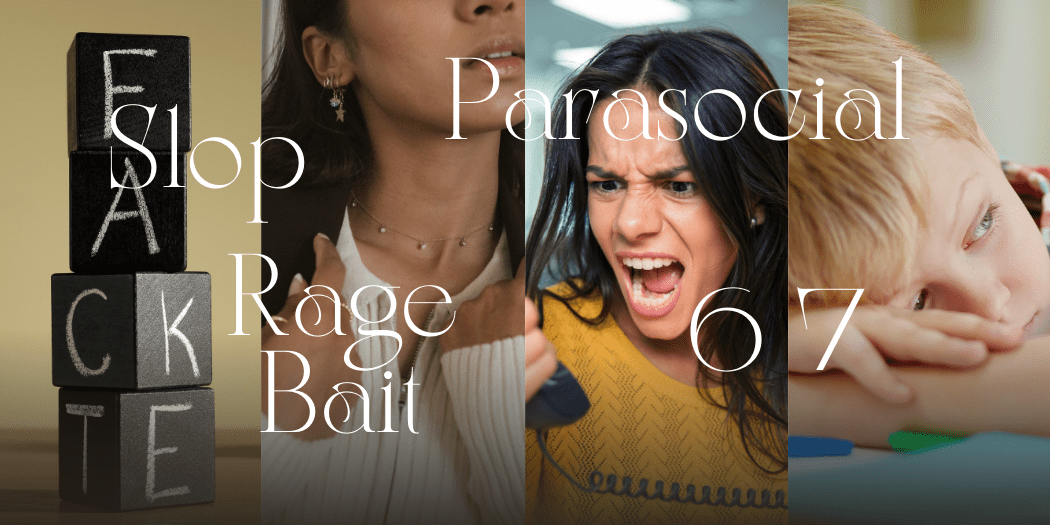
The four most talked-about words of 2025 are …
Slop
Merriam-Webster chose slop as its Word of the Year for 2025, defining it as low-quality digital content produced in quantity, especially by artificial intelligence. This includes poorly generated videos, bizarre ads, misinformation, and content that feels shallow or meaningless. The selection highlights a cultural moment where people are both surrounded by and weary of AI-generated media.
Rage bait
Oxford University Press chose rage bait, which describes digital posts or headlines created to provoke anger, outrage, or strong emotional reactions. Its rise in use shows how easily our emotions can be manipulated online.
Parasocial
The Cambridge Dictionary selected parasocial, a term that comes from psychology but has become widely used to describe one-sided emotional relationships, especially the kind fans feel toward influencers, celebrities, or even AI characters. In an age where people know so much about digital personalities, but those people don’t know them back, this word captures a uniquely modern social experience.
67
Not all choices are so easy to define. Dictionary.com named 67 (pronounced “six-seven”) as its Word of the Year; a number that became a viral slang term through social media and youth culture. Its exact meaning is hard to explain and changes with the context it is used in (sometimes it means indifference, boredom or rebellion, among others) but its popularity shows how language, especially online, can playfully shift beyond words into symbols and memes.
Why Do These Words Matter?
Words of the Year aren’t just vocabulary; they’re snapshots of our culture. They remind us that the language we use reflects how we live, think, and interact with the world, especially in an era dominated by technology and digital communication.
Greetings from Michael Robbs,
Professional Trainer, Coach & Mentor of our Business English Courses